Blossom end rot affects roughly one in two home vegetable gardens every growing season — and almost every gardener who sees it blames the soil when the fix is usually about water.
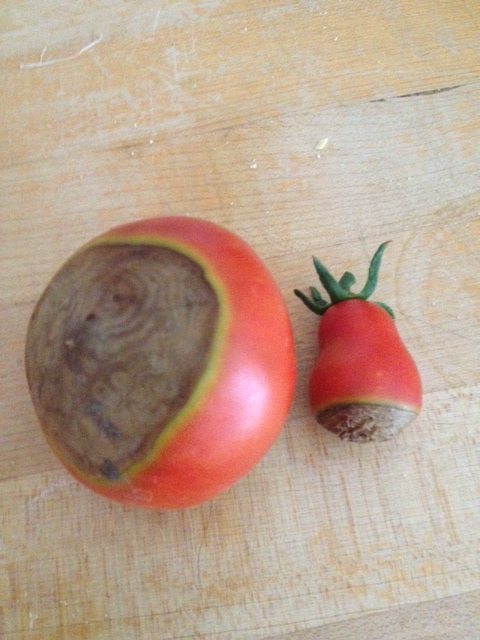
You grow a tomato all summer. You watch it turn red. You reach down to pick it, flip it over, and there it is: a blackened, sunken, leathery patch covering the bottom third. Before you rip the plant out, know that the plant itself is almost certainly fine. The problem is fixable, often without spending more than $20.
What That Black Spot on Your Tomato Actually Is
Blossom end rot is not a disease. No fungus. No bacteria. No pest. It is a physiological disorder — the plant’s own cells have collapsed because conditions made it impossible for them to survive.
The rot appears at the blossom end: the bottom of the fruit, directly opposite the stem. Early signs are a small, water-soaked patch that looks slightly pale or grayish. Within days it darkens to brown, then black. The skin pulls tight and leathery. The tissue underneath collapses. By the time most gardeners spot it, the damage is weeks old.
Why Calcium Shortage Causes the Rot
Calcium is the structural material that holds plant cell walls together. A developing tomato fruit is one of the most calcium-hungry tissues in the plant — it grows fast and pulls calcium constantly to build new cells.
When the fruit’s calcium demand outpaces supply, the cells at the blossom end break down. Literally. Membranes fail, cells collapse, and rot sets in. The black patch you see represents thousands of dead cells.
This does not always mean your soil lacks calcium. More often, something is blocking the plant from absorbing and transporting what is already there. That distinction matters enormously when you are trying to fix the problem.
Which Crops Are Most Affected
Tomatoes get most of the attention, but blossom end rot hits several vegetables:
- Tomatoes — all varieties, though Roma and paste types show it more often
- Peppers — bell peppers and chilis are equally vulnerable
- Eggplant
- Zucchini and summer squash (look for the rot at the blossom scar, not the stem end)
- Watermelon — less common but it happens in hot, dry summers
Cucumbers and leafy greens essentially never get it. If you’re seeing rot across multiple vegetable types at once, you have a garden-wide watering or soil problem worth diagnosing before next season.
Why the First Fruits Always Get Hit Hardest
Blossom end rot almost always attacks the first flush of fruit — the earliest tomatoes or peppers to set on the plant. Those fruits are forming during the most stressful stretch: roots not yet established, soil temperatures swinging, the plant’s vascular system still ramping up.
Later fruits on the same plant often look completely clean. Good news — you have not lost the whole season, just the first wave. Fixing the problem now saves most of your harvest.
The Real Villain Is Your Garden Hose, Not Your Soil
Most garden soils have enough calcium. The problem is that erratic watering prevents the plant from using what is already there.
Calcium moves through plants dissolved in water via a process called transpiration-driven flow: water pulls calcium from the roots up through stems and into developing tissue. This only works when water moves through the plant steadily. Stop the flow — even for a single day — and calcium transport stops with it.
When soil dries out and you compensate with a heavy watering, the plant takes up water fast, but it goes where growth is fastest: leaves and stems, not the fruit. The boom-bust watering cycle is worse than mild underwatering because it creates exactly the calcium lockout that causes rot.
The 1-2 Inch Rule and Why Most Gardeners Underdo It
Tomatoes and peppers need 1 to 2 inches of water per week, delivered consistently. Not 4 inches one week and none the next. Each session should wet the soil to about 6 inches down. Push a screwdriver into the soil after watering — if it hits dry resistance before 6 inches, water longer next time.
Get a rain gauge. The Stratus Precision Rain Gauge costs $12 on Amazon and shows you exactly what your garden is getting. Most gardeners are surprised. They think they are watering enough. The gauge disagrees.
Drip Irrigation Is the Single Best Fix
The Rain Bird DRIP1000 drip irrigation kit costs about $30 at Home Depot. It delivers water directly to each plant’s root zone — slow, steady, and targeted. Pair it with a Rain Bird 1ZEHTMR mechanical timer ($25) and your watering is fully automated and calibrated without any ongoing effort.
This one change — switching to consistent drip irrigation — eliminates blossom end rot in most home gardens without any soil amendments at all. Fix the water, and the calcium problem usually fixes itself.
Five Steps to Stop Blossom End Rot This Season
You have affected fruit on the plant right now. Here is what to do, in order, this week:
- Remove all damaged fruit immediately. Pick off every tomato or pepper with visible rot. The plant is spending resources on fruit it cannot save. Removing them redirects energy toward healthy new fruit and blossoms.
- Mulch the soil around each plant. Add 3 to 4 inches of straw or wood chip mulch, kept an inch from the stem. Mulch slows moisture loss dramatically between waterings. A $10 bale of wheat straw from any garden center covers three or four tomato plants.
- Adjust your watering schedule. Switch to deep watering every 2 to 3 days instead of a light sprinkle daily. Consistent depth matters more than consistent timing.
- Apply a foliar calcium spray. Bonide Rot-Stop Tomato & Vegetable spray ($12 for 32 oz at Home Depot and most garden centers) contains calcium chloride in a form the plant absorbs through leaves and fruit. Spray every 5 to 7 days. This will not reverse existing rot, but it gets calcium to developing fruit fast while your soil situation improves.
- Test your soil pH. Calcium availability drops sharply outside a pH of 6.2 to 6.8. Below 6.0, calcium binds to soil particles and the plant cannot access it. The Luster Leaf 1601 Rapitest Soil Test Kit ($18 on Amazon) tests pH plus nitrogen, phosphorus, and potassium in about 10 minutes. If pH is below 6.0, add lime to raise it.
Do all five steps together, not one at a time. The problem is usually several factors compounding, and fixing only one produces slow or incomplete results.
Which Calcium Fix Works Fastest: A Direct Comparison
Multiple products claim to stop blossom end rot. Here is what actually works, how quickly, and what it costs.
| Product | Calcium Content | Time to Work | How to Apply | Price | Best Use Case |
|---|---|---|---|---|---|
| Bonide Rot-Stop (foliar spray) | Calcium chloride solution | 24–48 hours | Spray on fruit and foliage | $12 / 32 oz | Mid-season emergency |
| Down To Earth Gypsum | 22% calcium | 2–4 weeks | 1 cup per plant, worked into soil | $15 / 5 lbs | In-ground beds, pH-neutral |
| Bonide Hi-Yield Lime | 20–40% calcium | 3–6 weeks | 1 cup per plant, soil surface | $12 / 5 lbs | Acidic soil needing pH raised |
| Burpee Organic Bone Meal | 12–15% calcium | 3–6 weeks | 2 cups per plant, pre-plant | $10 / 3 lbs | Fall soil prep only |
| General Hydroponics Calcium Nitrate | 19% calcium | 1–2 weeks | Dissolve in water, drench soil | $18 / 5 lbs | Containers and raised beds |
For plants actively losing fruit right now, start with Bonide Rot-Stop spray — it is the fastest available calcium delivery method. Follow up with Down To Earth Gypsum worked into the soil around each plant. Gypsum adds calcium without changing pH, so it is safe to use without a soil test first.
Skip bone meal mid-season. It breaks down too slowly to help fruit that is already forming. Work it into your beds each fall instead, so it is fully available by the following spring’s planting date.
Can You Still Eat the Tomato?
Yes. Cut off everything that is black, sunken, or mushy, and the rest of the tomato is completely safe to eat. The unaffected flesh tastes normal. Blossom end rot is not a pathogen — it will not spread to other fruit in storage, and it has no effect on the parts of the tomato that look and feel healthy.
Use these for sauce, salsa, or roasting rather than slicing fresh. You lose some volume. The flavor is unaffected.
Why Container Tomatoes Get Hit Three Times Harder
Growing tomatoes in pots and seeing constant blossom end rot? You are not doing anything wrong. Containers are structurally prone to this problem in ways that in-ground gardens simply are not.
Why do containers cause more blossom end rot?
Three specific reasons. First, containers dry out far faster than garden beds — sometimes within 24 hours on a hot summer day. That drying cycle stops calcium transport at exactly the wrong moment. Second, a container holds a fixed volume of soil, which means a fixed calcium supply. A mature tomato plant in a 5-gallon bucket depletes available calcium by midsummer. Third, regular watering leaches nutrients — including calcium — straight out through the drainage holes. The more you water to prevent dryness, the more calcium you wash away.
What size container actually works for tomatoes?
Tomatoes need a minimum of 15 gallons of soil volume. Most gardeners use 5-gallon buckets. That is too small for anything past the seedling stage, and it is one of the most common reasons container gardeners struggle with blossom end rot year after year.
The Grotrays 20-gallon fabric grow bags (about $18 for a 5-pack on Amazon) drain well, air-prune roots to prevent circling, and hold enough soil volume to keep moisture and nutrients stable through a full growing season. Bag size matters more than any soil amendment you can add.
How to prevent blossom end rot in containers specifically
Three steps beyond the general fixes above:
- Mix perlite into your potting mix at 20 to 30 percent by volume. It holds moisture longer without waterlogging roots.
- Add 2 tablespoons of General Hydroponics Calcium Nitrate ($18 / 5 lbs) to the first watering of each season, then monthly after that. This replaces the calcium that regular watering leaches out.
- Water twice daily during heat waves — once in the morning and once in early afternoon — rather than one heavy dose. A single large watering creates the boom-bust cycle that blocks calcium uptake.
Espoma Organic Tomato-tone ($9 for 4 lbs at most garden centers) is formulated with extra calcium and magnesium beyond what standard fertilizers provide, and it is worth using throughout the season for container plants specifically.
Consistent water delivery — not calcium supplements — is the real fix for blossom end rot, and drip irrigation solves it better than anything you will buy in a bottle.