Buy the pinkest stalks you can find, get there early in the season, and don’t skimp on sugar. That’s the short version. The longer version involves understanding why rhubarb is one of the most misused ingredients in home cooking — and how to stop treating it like a fruit when it needs to be treated like a sour vegetable that happens to go brilliantly with custard.
Forced Rhubarb vs. Field Rhubarb: What You’re Actually Buying
Most people don’t realize they’re buying two completely different things depending on the time of year. Forced rhubarb comes first — grown in heated sheds in near-total darkness, traditionally from the Yorkshire Rhubarb Triangle in West Yorkshire. Available from January through April, the stalks are thin, candy-pink, almost neon, and the flavor is delicate and sweet compared to anything grown outdoors. Field rhubarb follows in spring and summer, with thicker stalks, more green coloring, and a sharper, more aggressive sourness.
Forced rhubarb is worth the premium for recipes where rhubarb is the star — panna cotta, rhubarb fool, rhubarb curd. The color alone justifies the cost. Field rhubarb is perfectly fine for jams, crumbles, and anything cooked down with lots of sugar.
| Type | Season | Color | Flavor | Best Use | Avg. Price |
|---|---|---|---|---|---|
| Forced (Yorkshire) | Jan–April | Deep pink/crimson | Tender, mild-tart | Compotes, fools, curd | £3–£5 per 500g |
| Field-grown (early) | April–June | Pink-green | Tart, balanced | Pies, crumbles, jam | £1.50–£2.50 per 500g |
| Field-grown (late) | June–August | Mostly green | Very sour, fibrous | Jam, chutney, savory sauces | £1–£2 per 500g |
| Frozen (supermarket) | Year-round | Variable | Decent, slightly watery | Crumbles, sauces, smoothies | £1.50–£2 per 400g |
When picking stalks at a market or farm shop, look for firm texture, no sliminess, and minimal browning at the cut ends. Green stalks aren’t ruined — they’re just sharper. Buying for a crumble? Green is fine. Making rhubarb syllabub or anything where color matters visually? Pay for the forced rhubarb.
What Is the Yorkshire Rhubarb Triangle?
A nine-square-mile growing region between Wakefield, Morley, and Rothwell in West Yorkshire that produces around 90% of the world’s forced rhubarb during winter. The forcing technique — harvesting by candlelight in dark heated sheds after planting roots in warmed buildings — was developed in the 1800s. The resulting rhubarb is sweeter and more tender than anything grown in open ground. It’s one of Britain’s genuinely great food specialties, even if most people just chop it into a crumble without thinking about where it came from.
Varieties Worth Growing at Home
Timperley Early is the best choice if you want to force rhubarb yourself — it’s one of the earliest varieties and responds well to a terracotta forcer or an upturned bucket placed over the crown in late winter. Victoria is the most widely grown, reliable and productive through mid-season. Champagne gives particularly pink stalks and is worth seeking out for desserts. All three are available from Marshalls Seeds or RHS-affiliated nurseries for around £5–£8 per crown.
The Sugar Question: Getting Rhubarb’s Flavor Actually Right
Rhubarb’s sourness comes from malic and oxalic acid. Raw rhubarb is essentially inedible to most people — sharp in a way that makes your teeth feel strange. This is where most rhubarb cooking goes wrong: not enough sugar, or adding it too late in the process.
The ratio that consistently works for a crumble or pie filling is roughly 100g of sugar per 500g of rhubarb. That’s a starting point, not a law — forced rhubarb needs less, very green late-season stalks need more. Taste before you cook. If the raw mixture tastes pleasantly tart rather than face-puckering, it’ll be right once cooked.
Maceration is the step most home cooks skip entirely. Toss your chopped rhubarb with sugar and leave it for 30–45 minutes before applying any heat. The sugar draws out juice and the texture begins softening without cooking. For crumbles this produces a thick, jammy filling instead of a watery puddle under the topping. For double-crust pies it prevents the sunken, swimming-in-liquid filling that ruins so many homemade attempts. One step, fixes the most common failure mode in one go.
Strawberries are the classic pairing because their natural sweetness counteracts rhubarb’s acid without adding plain sugar — and the flavors genuinely suit each other. But ginger is arguably better once you’ve made it that way. Fresh grated ginger, about 1 tsp per 500g rhubarb, or chopped stem ginger in syrup transforms a basic crumble into something that tastes like it was thought through. Nigel Slater makes this case convincingly in Tender: A Cook and His Vegetable Patch, and it’s the version I’ve made every spring since reading it.
What doesn’t work: rhubarb baked into heavily spiced cakes, where its sharpness gets completely buried and the texture turns stringy. Also rhubarb salad dressing. I’ve tried three versions and every one of them tasted wrong. Some experiments aren’t worth repeating.
Which Sugar to Use and Why It Matters
Caster sugar dissolves fastest and is best for compotes and fools where you want a clean, smooth result. Soft brown sugar adds a low caramel note that works well in crumbles and alongside ginger. For jam, use Tate & Lyle Jam Sugar (around £2.50 for 1kg) — rhubarb is naturally low in pectin, and without the added pectin in jam sugar you typically end up with rhubarb syrup rather than anything that sets properly.
When to Use Cornstarch (and When to Skip It)
American rhubarb pie recipes typically call for 2–3 tablespoons of cornstarch to thicken the filling. British crumble recipes almost never use it — the topping absorbs excess liquid. If you’re making a double-crust pie you want to slice cleanly, add 2 tablespoons of cornstarch per 500g rhubarb. Skip it for crumbles, compotes, or anything served warm in a bowl where a looser texture is fine.
Five Rhubarb Recipes Worth Making Right Now
- Rhubarb and Ginger Crumble — Macerate 600g chopped rhubarb with 120g caster sugar and 2 tsp grated fresh ginger for 45 minutes. Drain off half the released juice (drink it — it’s genuinely good over ice). Top with a crumble made from 180g plain flour, 90g cold butter, 60g rolled oats, 80g demerara sugar. Bake at 190°C for 35–40 minutes until golden and bubbling at the edges.
- Rhubarb Fool — Best made with forced rhubarb for the color. Cook 400g rhubarb with 80g sugar and 2 tbsp water until completely collapsed, then cool it fully in the fridge. Fold through 300ml whipped double cream until you have pink streaks throughout. Serve in glasses. The contrast of sharp fruit and cold cream is one of the genuinely perfect things in British cooking and it takes about 20 minutes total.
- Strawberry and Rhubarb Jam — Combine 500g rhubarb, 500g strawberries, 800g Tate & Lyle Jam Sugar, and the juice of 1 lemon in a large pot. Cook to 105°C — a jam thermometer removes all guesswork from this. Pot immediately into sterilized jars. Makes around 4 × 250g jars. Better than Bonne Maman Rhubarb Jam or Hartley’s Rhubarb Jam, and those are both genuinely good products.
- Rhubarb Curd — Less famous than lemon curd but just as good and more interesting. Cook 300g rhubarb with 60g sugar until it collapses to a smooth purée. Whisk with 3 eggs, 80g butter, and 60g sugar over a double boiler, stirring constantly until thick and glossy. With forced rhubarb, the color is a deep rose pink that looks far more impressive than the effort involved.
- Rhubarb Compote — The most versatile base you can make. Chop 500g rhubarb, add 100g sugar, cook on medium heat for 10–15 minutes until soft but not completely collapsed. Use it on morning yogurt, on porridge, over vanilla ice cream, or alongside roast duck or pork. Keeps in the fridge for up to a week. Make a double batch and freeze half in 200g portions.
The Leaf Warning Nobody Mentions Enough
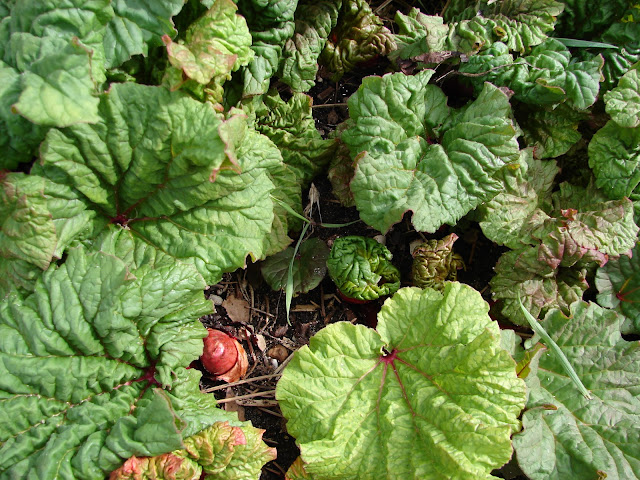
Rhubarb leaves are toxic. Don’t use them, don’t assume they’re safe in small amounts, and don’t compost them anywhere near a food garden. The leaves contain oxalic acid in concentrations high enough to cause kidney damage — there are documented cases of serious poisoning. Cut the leaves off immediately when you bring rhubarb home, bin them separately, and wash the stalks thoroughly before use.
Storing Rhubarb Without Wasting Half of It
How long does fresh rhubarb keep in the fridge?
Cut stalks loosely wrapped in a damp paper towel and placed in a plastic bag will keep for 5–7 days in the fridge. Don’t seal them in an airtight container without ventilation — they sweat and go slimy within two days. If the stalks are starting to feel soft or the cut ends look shrunken and dry, use them that day or freeze them immediately.
Can you freeze rhubarb without cooking it first?
Yes, and it’s the simplest way to deal with a glut. Chop into 2–3cm pieces, spread in a single layer on a baking tray, and freeze for two hours until solid. Then transfer to bags in usable portions. This prevents them freezing into one solid block you have to hack at. Frozen rhubarb goes directly from freezer to pan — no thawing needed for compotes or crumbles. The texture will be softer once cooked, but for almost every application this doesn’t matter. Keeps well for up to 12 months.
Is homemade rhubarb jam actually worth making?
Bonne Maman Rhubarb Jam (around £3.50 for 370g) is genuinely good — no need to pretend otherwise. But homemade lets you control the sugar level and build flavor combinations like rhubarb-vanilla or rhubarb-orange that simply don’t exist commercially. More practically, if you have a garden rhubarb crown, jam is the only realistic way to keep up with a serious harvest. A single well-established crown produces 2–3kg of stalks per season easily, and that’s far more than most households will eat fresh.
What about quick-pickling rhubarb?
Thin slices submerged in a 50/50 mix of white wine vinegar and water with a pinch each of sugar and salt will keep for two weeks in the fridge and are excellent on cheese boards and charcuterie plates. It’s underused and genuinely worth trying at least once — the natural sharpness of rhubarb works with the vinegar rather than fighting it, which surprises most people the first time.
Rhubarb Beyond Dessert: The Savory Uses That Actually Work
The assumption that rhubarb belongs exclusively in puddings is a specifically British and American blind spot. The rest of the world sorted this out centuries ago, and it’s worth paying attention to them.
In Persian cooking, rhubarb has been used in savory dishes for hundreds of years. Khoresh-e rivas, a lamb and rhubarb stew with fresh herbs, is one of the great spring dishes of Iranian cuisine. The rhubarb is added near the end of cooking and provides sour balance in exactly the same way preserved lemon does in North African food. Sabrina Ghayour covers this territory clearly in Persiana, which is the book to own if you want to cook Persian food without specialist ingredients.
Rhubarb chutney is the easiest entry point into savory rhubarb cooking. Combine 500g chopped rhubarb with 200g soft brown sugar, 150ml cider vinegar, 1 diced onion, 1 tsp ground ginger, and half a teaspoon of chili flakes. Cook down for 30–40 minutes, stirring occasionally, until thick and jammy. Excellent with aged cheddar, cold pork, or a proper ploughman’s. Better than most commercial chutneys at this price point, which is around zero pence per jar once you’ve made it.
Rhubarb shrubs — drinking vinegars used as cocktail mixers or soft drinks — have had a real revival in recent years. Make one by combining equal weights of rhubarb, sugar, and apple cider vinegar in a jar, leaving it in the fridge for 48 hours, then straining and bottling. A tablespoon in sparkling water is refreshing on its own. Two tablespoons with gin and tonic is considerably better. The Bramble bar in Edinburgh was putting rhubarb in cocktails a full decade before it became a widespread trend.
Rhubarb season is shorter than it feels. Even with field-grown running through summer, the real sweet spot — when stalks are firm, the flavor is balanced, and you’re not fighting aggressive sourness at every step — is maybe six weeks in late spring. The cooks who genuinely make the most of it are the ones who batch-freeze in April and get at least one pot of jam or chutney made before the window closes. Everything worth doing with rhubarb starts from that decision.