I ruined my forsythia’s bloom cycle three springs running before I understood what I was doing wrong. The plant was healthy — lush, growing fast, no signs of disease. I was just pruning it at the completely wrong time and couldn’t figure out why it refused to flower.
Here’s what I know now.
The Year I Pruned in September and Got Zero Flowers
My forsythia had grown into a sprawling, 8-foot-wide mound blocking the path alongside my garage. By early September it looked done for the year — leaves yellowing, growth slowing. I had a free weekend, so I gave it a hard cut. Removed roughly half the old canes, shaped the perimeter, cleaned up the base. It looked great.
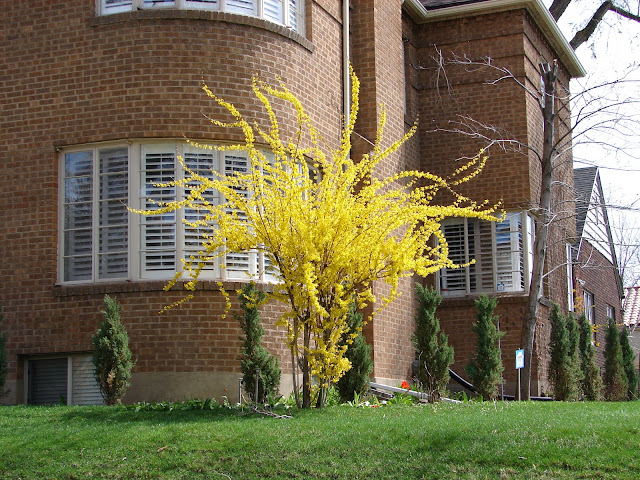
The following April, my neighbor’s forsythia turned into a wall of yellow flowers. Mine leafed out. Just green. No flowers at all.
I assumed I’d stressed it. Gave it another year. Same result — a second full spring with nothing but foliage. What I didn’t know was that forsythia blooms on old wood. Specifically, on flower buds that form on the current season’s canes during summer, then spend winter dormant, waiting to open in spring. When I cut those canes in September, I wasn’t trimming an overgrown shrub. I was removing every flower the plant had already prepared for the following year.
The plant wasn’t damaged. I had pruned away the bloom before it ever had a chance.
I’ve talked to dozens of gardeners who have made this exact mistake. You inherit an overgrown forsythia, cut it back in fall when you finally have time, and then spend two springs wondering why it won’t flower. The plant isn’t broken. The timing is.
Why Forsythia Timing Is Unlike Every Other Shrub You Have Pruned
Most of what people learn about pruning comes from experience with summer-blooming shrubs. Butterfly bush (Buddleja davidii) blooms on new growth — cut it hard in March and it flowers spectacularly by July. Rose of Sharon works the same way. Crape myrtles. Many roses. The logic is: prune hard in late winter before growth starts, the plant pushes new canes, those canes bloom.
Forsythia doesn’t work this way. It blooms on what’s called “old wood” — branches that grew during the previous season and spent the winter holding flower buds. The cycle looks like this:
- Spring: Flowers open on canes that grew last summer
- Late spring through summer: Plant pushes new canes and sets flower buds on those canes
- Fall and winter: Buds sit dormant, waiting
- Following spring: Those buds open and the cycle repeats
Cut those summer canes any time between July and February and you have removed the flowers. There is no workaround.
Does Your Climate Zone Change the Rule?
It changes when you prune, not whether the rule applies. Forsythia blooms at different times depending on your USDA zone. Zone 5 (Minneapolis, Chicago) typically sees flowers late March to mid-April. Zone 6 (Philadelphia, St. Louis) runs mid-March to early April. Zone 7–8 (Atlanta, Portland, Seattle) can bloom as early as late February.
The pruning window — 2 to 4 weeks after last bloom — shifts accordingly. In Zone 5, you might be pruning in early May. In Zone 8, you could be done by mid-March. Same biology, different calendar.
Do All Forsythia Varieties Follow the Same Rule?
Yes, without exception. The most common varieties you will encounter — ‘Lynwood Gold’ (the classic large arching habit), ‘Northern Gold’ (bred for hardiness in Zone 4), ‘New Hampshire Gold’ (similarly cold-tolerant), and the compact ‘Mindor’ (sold as Show Off Starlet in some markets) — all bloom on old wood. There is no forsythia variety where fall pruning is safe for flower production. Do not let anyone tell you otherwise.
The Exact Pruning Window: 2 to 4 Weeks After Bloom
My rule: prune forsythia within 2 to 4 weeks after the last flowers drop. Not when you get around to it in fall. Not in late winter when the yard looks messy. Right after it flowers.
That window gives the plant time to finish blooming fully while leaving enough of the growing season ahead for new canes to develop and set flower buds for next spring. Push past 6 weeks post-bloom and you start removing canes that are already beginning to set buds.
Miss the window entirely? Leave the forsythia alone until next year. A slightly overgrown shrub that blooms is worth more than a tidy one that doesn’t.
What Happens When You Prune at the Wrong Time
| Pruning Timing | Effect on Next Spring’s Blooms | Verdict |
|---|---|---|
| 2–4 weeks after bloom (ideal window) | Full blooms — new canes have the whole summer to grow and set buds | Always do this |
| 5–7 weeks after bloom (late spring) | Slightly reduced — some bud-setting canes cut, but most remain | Fine for light pruning only |
| Mid to late summer (July–August) | Significant bloom reduction — buds already forming on cut branches | Avoid |
| Fall (September–November) | Blooms largely or completely lost | Never |
| Winter (December–February) | Same as fall — buds fully set, pruning removes them entirely | Never |
| Just before spring bloom (late winter) | Removes buds right before they open — destroys that season’s display | Never |
One safe window. Five ways to ruin it. The math is not complicated.
How I Actually Prune Forsythia: My Step-by-Step Process
Once the last yellow flowers have fallen and leaves are just beginning to push — that’s the signal. Here’s exactly what I do:
- Walk the shrub first. Identify dead wood (gray, brittle, snaps cleanly without bending), branches crossing and rubbing each other, and the oldest thickest canes at the base. Know your targets before making a single cut.
- Remove dead wood first. Dead canes come out regardless of season. Clearing them gives you a much clearer picture of the plant’s actual structure.
- Cut one-third of the oldest canes to the ground. The thick, gnarled canes at the base are the least productive. Cutting them down triggers the plant to push vigorous new canes from the crown — and new canes bloom far better than old ones.
- Shape the perimeter. Cut arching outer branches back to a side branch lower on the stem. Don’t clip tips — cut back to a real branch junction. Tip shearing creates a knotty mass of twigs that looks neat for one week, then takes over.
- Stop at one-third removal. Removing more than one-third of the plant in a single season stresses it and slows recovery significantly. That’s the ceiling.
On tools: I have been using the Felco F-2 Classic Manual Hand Pruner ($65) for stems under an inch in diameter for about eight years. Swiss steel holds an edge, and the cuts are clean enough that the wood heals fast. For thicker base canes I use the Corona ClassicCUT Forged Bypass Lopper ($50), which handles up to 1.75-inch stems without much effort. If you’re newer to this and don’t want to spend $65 on pruners yet, the Fiskars Steel Bypass Pruning Shears ($22) do solid work for light maintenance. I had a pair for years before upgrading.
One thing I never skip: wiping blades with isopropyl alcohol between plants. Fungal diseases spread on dirty blades faster than most gardeners realize, and forsythia is not immune.
Renovation Pruning vs. Light Maintenance: Two Very Different Jobs
Is it leggy, sparse-flowering, and hollow in the center?
That’s a shrub in need of renovation, not maintenance. Old forsythias develop a dense, twiggy outer shell with dead, nonproductive wood inside. Light trimming won’t fix this — you need to reset the structure.
Two approaches. The aggressive one: cut the entire shrub down to 6–12 inches from the ground immediately after bloom. You will lose next year’s flowers because new canes won’t set enough buds in their first growing season. But by year two you’ll have strong new growth, and by year three the flowering is typically excellent. I did this to a 20-year-old forsythia at a house I rented. It looked brutal the first summer. By the third spring it was the most floriferous shrub on the street.
The gentler approach: remove one-third of the oldest canes to the ground each year for three consecutive years. By year three you’ve fully replaced the old framework without losing a single spring bloom. This is the method I use now whenever I’m not in a hurry.
Is it just slightly bigger than you want?
Then you’re doing light maintenance. Cut the longest arching branches back to a side branch lower on the stem. Remove dead wood. Step back, check the shape, and stop. You probably don’t need to touch the base canes at all.
The common mistake here is repeated shearing — treating forsythia like a yew hedge, running electric shears across the surface every season. This creates a dense thatch of short twigs, kills off interior growth, and gradually turns the shrub into a hollow, barely-flowering ball. Forsythia responds to cuts that go somewhere real: to the ground or to a genuine branch junction. Random tip cuts every fall compound into a serious problem over several years.
Can you do a full hard cut without losing any blooms?
Only with precise timing. A hard cut in late winter means you’ve removed bud-bearing wood before it could open — total bloom loss for that spring. A hard cut in fall is the same outcome. But a hard cut immediately after the flowers drop, within that 2-to-4-week post-bloom window, gives the plant a full growing season to push new canes. In a heavy renovation scenario you’ll still likely miss the following spring’s bloom as new canes establish, but you haven’t destroyed anything — you’ve reset the clock on a healthier timeline.
When You Should Never Prune Forsythia
Fall. Winter. Late summer. Right before it blooms in spring. Those four periods cover about eight months of the year, and every single one will cost you flowers the following spring.
The forsythia doesn’t care that October is when you have time. It will respond to out-of-window pruning the same way every time: by simply not flowering. The one exception is dead or clearly diseased wood — that can be removed at any time without bloom consequences, since dead canes carry no viable buds. Every healthy green cane is another matter.
Here’s the quick summary before you head outside:
- Best pruning window: 2–4 weeks after last flowers drop (late April to early May in Zone 5–6; mid-March in Zone 7–8)
- Worst times: Fall, winter, late summer, and just before bloom — all eliminate next spring’s flowers
- Annual removal limit: No more than one-third of canes per season
- Renovation (leggy, hollow shrub): Remove one-third of oldest canes for 3 years (preserves blooms) OR cut to 6 inches post-bloom (lose 1 year, fully reset the plant)
- Best pruner for thin stems: Felco F-2 ($65) or Fiskars Steel Bypass ($22 budget pick)
- Best tool for thick base canes: Corona ClassicCUT Forged Bypass Lopper ($50)
- Never shear: Always cut to a branch junction or ground level — forsythia is not a hedge