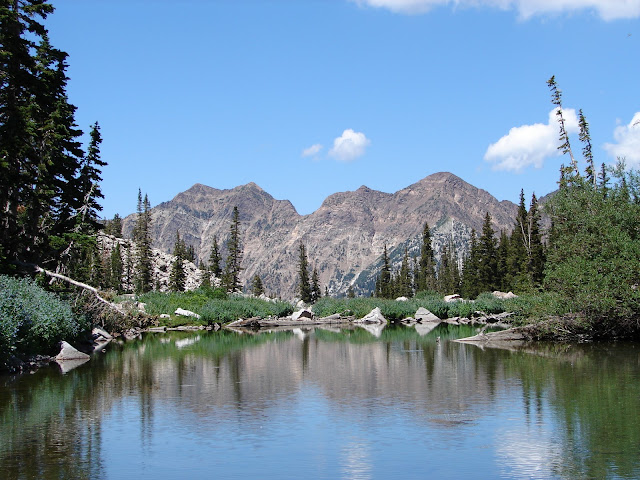
Did you know that less than 10% of the world’s known plant species actually grow above 10,000 feet? These high-altitude survivors are mountain wildflowers, a testament to resilience and adaptation in some of Earth’s harshest environments. For hikers and nature enthusiasts, encountering a vibrant patch of these delicate blooms can be a truly breathtaking experience. But beyond the immediate visual delight, lies a fascinating world of specific adaptations, regional variations, and intricate ecological roles. Understanding these plants transforms a casual walk into a deeper exploration of natural history and botanical wonders.
Identifying mountain wildflowers isn’t just a fun hobby; it’s a way to connect more profoundly with the landscapes you traverse. It helps you recognize the subtle signals of different ecosystems and appreciate the sheer tenacity of life. This guide will take you through the incredible ways these plants thrive, highlight some common species you might encounter across various mountain ranges, and equip you with the knowledge and ethical framework needed to become a confident, respectful observer of alpine flora.
Unpacking Alpine Adaptations: How Wildflowers Thrive in Extreme Conditions
Mountain environments are brutal for plants. They face intense ultraviolet radiation, strong winds, sudden temperature swings, thin soils, and a growing season that can be shockingly brief, sometimes lasting only a few weeks. Yet, a diverse array of wildflowers not only survives but flourishes here. Their success isn’t by chance; it’s the result of millennia of evolutionary fine-tuning, leading to a suite of specialized adaptations that would be unnecessary, or even detrimental, at lower elevations.
Many alpine plants have developed ingenious ways to combat the cold and conserve precious resources. Their small stature is a common thread, keeping them close to the ground where temperatures are often warmer and wind speeds are lower. Beyond mere size, specific growth forms and physiological mechanisms play crucial roles in their survival strategy, turning these delicate-looking plants into genuine high-altitude powerhouses.
Tiny Powerhouses: Cushion Plants and Rosettes
Among the most striking adaptations are the growth forms known as cushion plants and rosettes. Cushion plants, such as the ubiquitous Moss Campion (*Silene acaulis*), grow in dense, mound-like formations. These compact structures act like miniature greenhouses, trapping solar heat and significantly raising the temperature within the cushion compared to the surrounding air. This microclimate not only helps them stay warm but also reduces moisture loss from wind exposure. The tightly packed stems and leaves also provide protection from abrasive wind-borne ice and snow.
Rosette-forming plants, like the Purple Saxifrage (*Saxifraga oppositifolia*), arrange their leaves in a circular pattern close to the ground. This minimizes the surface area exposed to harsh winds and allows the plant to absorb maximum solar radiation during the day. The leaves often lie flat against the soil or rocks, further benefiting from the stored heat. These plants often exhibit incredibly slow growth rates, sometimes taking decades to reach maturity, but can live for hundreds of years, a testament to their efficient resource management in extreme conditions.
Survival Strategies: Hairy Leaves and Deep Roots
Beyond their overall shape, mountain wildflowers possess a variety of specific features designed for survival. Many species develop dense coverings of fine hairs, a trait called pubescence, on their leaves and stems. These hairs, visible on plants like Pearly Everlasting (*Anaphalis margaritacea*) or many *Erigeron* species (fleabane), serve multiple purposes. They create an insulating layer, trapping warm air close to the plant surface, much like a down jacket. This hairy coat also reduces water loss through transpiration by breaking up airflow over the leaf surface, which is critical in arid, windy alpine zones.
Another vital adaptation involves their root systems. While above-ground growth may be minimal, many alpine plants develop incredibly deep and extensive taproots. These roots allow them to anchor firmly against strong winds, preventing them from being ripped from the shallow, often unstable mountain soils. More importantly, deep roots enable access to deeper moisture reserves, especially crucial in rocky, well-drained slopes where surface water can quickly evaporate. Some species also rhizomatous growth, spreading horizontally underground, which provides both stability and a means of storing energy for rapid growth when conditions allow.
Blooming Under Pressure: The Short Summer Window
The growing season in alpine zones can be incredibly short, sometimes just 6-8 weeks between snowmelts. This compressed timeline demands remarkable efficiency in reproduction. Many mountain wildflowers employ a strategy called pre-formed flower buds. This means that the flower buds for the following year are already developed and protected within the plant by the end of the current growing season, often overwintering beneath a blanket of snow. As soon as the snow melts and temperatures rise, these plants can rapidly unfurl their flowers, bypassing the time-consuming process of bud formation.
This rapid development is critical for completing their life cycle before the next winter. Pollination strategies are also adapted to the harsh conditions; many alpine flowers are brightly colored to attract scarce pollinators, and some even possess mechanisms to generate internal heat, making them more appealing to cold-blooded insects. The ability to quickly bloom, attract pollinators, and set seed ensures the survival of the species even with such a narrow window of opportunity.
Common Mountain Wildflowers by Region and Elevation
The beauty of mountain wildflowers isn’t uniform; it varies dramatically depending on the specific mountain range, its geological history, and elevation. While some genera are widespread, the species you’ll encounter in the Rocky Mountains might be entirely different from those in the Sierra Nevada or the Appalachian range. Each region hosts its own suite of endemic and characteristic flora, shaped by unique climatic and soil conditions. Understanding these regional distinctions enhances the identification process, offering clues even before a detailed examination of the plant itself.
Rocky Mountain Gems
The Rocky Mountains, stretching from British Columbia to New Mexico, boast a stunning diversity of wildflowers, often adapted to high elevations and diverse soil types derived from sedimentary and metamorphic rocks. Hikers frequently encounter vibrant blooms in subalpine meadows and alpine tundra. Many species here are recognized for their intense colors, a trait often linked to attracting specific pollinators in a vast landscape.
| Species Name (Common/Scientific) | Color | Bloom Period | Typical Elevation | Key Feature |
|---|---|---|---|---|
| Colorado Columbine (Aquilegia caerulea) | Blue/White/Yellow | June – August | 7,000-11,000 ft | Prominent spurs, state flower of Colorado |
| Indian Paintbrush (Castilleja spp.) | Red/Orange/Pink | July – September | 6,000-12,000 ft | Bracts, not petals, provide color; often semi-parasitic |
| Sky Pilot (Polemonium viscosum) | Blue/Purple | July – August | 11,000-14,000 ft | Sticky, musky-scented flowers; high alpine specialist |
| Alpine Sunflower (Hymenoxys grandiflora) | Bright Yellow | July – September | 9,000-13,000 ft | Large, solitary flower heads; strong aroma |
Sierra Nevada’s Unique Flora
The Sierra Nevada, running primarily through California, presents a different botanical character. Its granite-dominated geology and Mediterranean-influenced climate at lower elevations contribute to a distinct flora, with many endemic species found nowhere else. As you ascend, the rugged terrain gives way to subalpine forests and stark alpine zones where specialized plants thrive. Identification often involves appreciating the subtle beauty of species that have adapted to nutrient-poor soils and long, dry summers followed by heavy snowpacks.
| Species Name (Common/Scientific) | Color | Bloom Period | Typical Elevation | Key Feature |
|---|---|---|---|---|
| Western Azalea (Rhododendron occidentale) | White/Pink/Yellow | May – July | 2,000-8,000 ft | Fragrant, trumpet-shaped flowers; prefers moist areas |
| Sierra Shooting Star (Dodecatheon jeffreyi) | Magenta/Purple | June – August | 6,000-11,000 ft | Reflexed petals, prominent stamens |
| Alpine Lily (Lilium parvum) | Orange/Red | July – August | 6,000-10,000 ft | Turk’s cap form, spotted petals, often in wet meadows |
| Woven-Spike Phacelia (Phacelia imbricata) | Cream/White | May – July | 1,000-8,000 ft | Curled flower spikes, often hairy; common on dry slopes |
Eastern Mountain Beauties
The Appalachian Mountains, an older and more eroded range in eastern North America, offer a different wildflower experience. Here, many species are adapted to forested environments and moister conditions, with a strong influence from deciduous forest ecosystems. While true alpine tundra is rare, high-elevation balds and rocky outcrops harbor unique communities. The bloom season often starts earlier than in western ranges, with a flush of spring ephemerals preceding the summer show.
| Species Name (Common/Scientific) | Color | Bloom Period | Typical Elevation | Key Feature |
|---|---|---|---|---|
| Large-flowered Trillium (Trillium grandiflorum) | White | April – June | 1,000-4,000 ft | Three petals, three leaves, turns pink with age |
| Flame Azalea (Rhododendron calendulaceum) | Orange/Yellow/Red | May – July | 2,000-5,000 ft | Brilliant, showy flowers; deciduous shrub |
| Turk’s Cap Lily (Lilium superbum) | Orange/Red | July – August | 0-5,000 ft | Large, nodding flowers with recurved petals; often in moist areas |
| Bluets (Houstonia caerulea) | Pale Blue/White | April – June | 0-4,000 ft | Small, four-petaled flowers with yellow centers; forms carpets |
The Ethics of Observation: Leave No Trace Principles for Wildflowers
The beauty of mountain wildflowers is fragile. Their delicate ecosystems are easily disturbed, and their slow growth rates mean that recovery from damage can take decades, if ever. The single most important takeaway for any admirer of these plants is to simply observe and photograph them. Resist the urge to pick them, even just one. Every flower plays a vital role in its ecosystem, contributing to seed production, supporting pollinators, and maintaining genetic diversity. Your admiration can be expressed fully through respectful distance and careful photography, preserving their beauty for others and for the future of the mountain environment.
Essential Tools and Techniques for Wildflower Identification
Identifying mountain wildflowers effectively requires a combination of good tools and a systematic approach. While the sheer variety can seem daunting at first, a few key resources and techniques can dramatically improve your success rate, transforming frustration into discovery. The goal isn’t just to put a name to a flower, but to understand its unique characteristics and place in the ecosystem.
Field Guides and Apps
A reliable field guide is your best friend in the mountains. Look for guides specific to your region, as a general North American guide might lack the detail for local species. A good guide will feature clear photos or botanical illustrations, detailed descriptions of key identification features, and often, a dichotomous key that walks you through a series of choices to narrow down possibilities. Some guides include habitat information, elevation ranges, and bloom periods, all valuable clues. While no specific products are necessary, consider guides published by local botanical societies or university presses, as they tend to be highly accurate and regionally focused.
In recent years, identification apps have also become popular. Many use image recognition technology, where you upload a photo of the plant, and the app suggests possible matches. While these apps can be a helpful starting point, especially for quickly narrowing down a broad category, they are not infallible. Always cross-reference their suggestions with a trusted field guide or other botanical resources to confirm an identification. Relying solely on an app can lead to misidentification, particularly with look-alike species.
Key Identification Features
When you encounter a wildflower, adopt a methodical approach to observation. Don’t just look at the overall bloom; examine its individual parts and the plant’s broader structure. Here are the crucial features to note:
- Flower Color, Shape, and Size: Note the primary color, but also look for secondary colors or patterns. Is the flower bell-shaped, trumpet-shaped, star-shaped, or irregular? Are the petals fused or separate? What is its approximate diameter?
- Petal and Sepal Count: Count the number of petals and sepals. This can be a significant identifier for many plant families. For instance, members of the mustard family often have four petals, while the lily family typically has six.
- Leaf Arrangement: Are the leaves arranged alternately along the stem, opposite each other, or in whorls (a circle of leaves at one node)? Are they basal (growing from the base of the plant)?
- Leaf Shape and Margins: Describe the leaf shape (e.g., heart-shaped, lance-shaped, lobed, compound). Look closely at the leaf margins: are they smooth (entire), toothed (serrated), or deeply cut?
- Stem Characteristics: Is the stem hairy or smooth? Does it have thorns or bristles? Is it branched or unbranched? What is its overall height?
- Habitat and Elevation: Where exactly did you find the plant? Was it in a wet meadow, on a rocky slope, in a shaded forest, or near a stream? Note the approximate elevation. This context is often as important as the plant’s physical features.
- Bloom Time: While a guide will list typical bloom times, noting the exact date helps confirm identification and track local seasonal variations.
- Specialized Structures: Does the flower have any unusual parts, like spurs (e.g., Columbine), bracts (e.g., Indian Paintbrush), or glands? These unique features are often definitive.
Photography for Later Review
High-quality photographs are invaluable for identification, especially when you can’t make an immediate positive ID in the field. When photographing a wildflower:
- Take multiple shots from different angles: overhead, side-on, and a full plant shot.
- Include a sense of scale: carefully place a finger, a coin, or a small ruler next to the plant (without disturbing it) to show its size.
- Get close-ups of key features: focus on the center of the flower, individual petals, leaves (top and bottom), and the stem.
- Capture the habitat: take a broader photo that shows the surrounding environment. This contextual information can be crucial.
- Ensure good lighting and focus: avoid blurry images. A macro setting on your camera or phone can be very helpful for small details.
Why Do Some Wildflowers Look So Similar, and How Do I Tell Them Apart?
One of the most challenging aspects of wildflower identification is distinguishing between species that appear remarkably similar. It’s a common frustration for even experienced botanists. This phenomenon, often driven by evolutionary pressures, means that a casual glance might lead to misidentification, missing the subtle yet definitive clues that separate one species from another. Understanding why these similarities occur is the first step toward sharpening your identification skills.
What is “Mimicry” in Wildflowers?
The term “mimicry” in wildflowers isn’t always about one plant pretending to be another in the exact way an insect might mimic a harmful species. Instead, it often refers to convergent evolution, where unrelated or distantly related species evolve similar traits because they face similar environmental challenges or interact with the same pollinators. For example, many yellow-flowered composites (a broad group including sunflowers, asters, and daisies) might look alike to the untrained eye because their basic form is highly efficient for attracting generalist pollinators. These similarities can also arise when different species occupy similar niches, leading to similar growth forms or flower structures that are optimal for their specific conditions.
This means that while two plants might look nearly identical from a distance, they could belong to entirely different genera or even families. Their superficial resemblance makes identification a task requiring closer inspection, moving beyond color and general shape to the intricate details that define a species.
How Do I Distinguish Between Look-Alike Species?
The key to telling apart similar species lies in focusing on the subtle, often overlooked, details. This requires patience and a willingness to examine the plant meticulously. Here’s how to approach it:
- Focus on Floral Micro-Details: Examine the number of petals, sepals, stamens, and pistils. Look at their arrangement. For instance, two white-petaled flowers might seem identical, but one could have five petals and the other six, or their stamens might be fused differently. A hand lens (a small magnifying glass) is indispensable for this.
- Leaf Structure Beyond Basic Shape: While general leaf shape is important, also observe the veins, the texture (smooth, rough, hairy), and the exact margin (finely serrated versus coarsely toothed). Are there tiny glands on the leaves? How are the hairs distributed?
- Stem Characteristics: Check for hairs, thorns, or specific patterns on the stem. Is it hollow or solid? Does it exude any sap when broken?
- Growth Habit: Observe the overall plant structure. Is it creeping, upright, clump-forming, or single-stemmed? How does it branch? These characteristics can be highly diagnostic.
- Fruiting Bodies: If the plant has begun to form seeds or fruits, these can be very distinctive and often provide the definitive clues needed for identification.
- Smell: Crush a tiny piece of a leaf (only if you know the plant isn’t toxic and it’s abundant) and note its smell. Aromatic plants often have unique scents.
- Habitat Specifics: Even within a general habitat type (e.g., “wet meadow”), subtle differences in soil moisture, light levels, or associated plant communities can indicate different species.
Are There Common Families I Should Learn First?
Absolutely. Learning to recognize common plant families is one of the most effective strategies for breaking through identification barriers. Instead of memorizing hundreds of individual species, start by understanding the characteristic features of a few dominant families. Once you can place a plant into its family, the field guide becomes much easier to navigate, as you can flip directly to that section.
Key families to familiarize yourself with in mountain environments include:
- Asteraceae (Daisy/Sunflower Family): Characterized by their composite flower heads, which appear to be a single flower but are actually many tiny flowers (florets) grouped together. Examples include asters, goldenrods, and dandelions.
- Rosaceae (Rose Family): Often have flowers with five petals and numerous stamens, and leaves that are often serrated. Think wild roses, potentillas, and some avens.
- Fabaceae (Pea Family): Identified by their distinctive “pea-like” flowers, often with a banner, wings, and keel petals, and typically forming pods. Examples include lupines and clovers.
- Liliaceae (Lily Family): Generally have six tepals (petals and sepals that look alike) and six stamens. Lilies and some trilliums fall into this group.
- Ranunculaceae (Buttercup Family): Often have five separate petals and numerous stamens, with a preference for moist habitats. Buttercups and columbines are good examples.
By understanding these families, you gain a powerful framework for identification, making the process of exploring mountain wildflowers less about guessing and more about informed botanical detective work.
The true reward of identifying mountain wildflowers lies not just in naming them, but in cultivating a deeper connection to the intricate ecosystems they represent.