A hamburger can turn brown before it reaches the safe temperature of 160°F. Color is not a reliable safety signal, and the same problem appears on a sheet pan: browned vegetables may still be firm inside, while a chicken thigh can look ready before the thickest part reaches 165°F. A reliable autumn dinner needs a timing plan, not visual optimism.
The baseline below uses a 425°F oven, a full-size rimmed sheet pan, and vegetables cut into pieces of similar thickness. Treat the times as a starting schedule. Oven calibration, pan material, food temperature, moisture, and crowding all change the result. For meat and poultry safety, check the USDA safe-temperature chart rather than trusting color or juice.
Autumn vegetable roasting times at 425°F
The following chart assumes dry vegetables, a lightly oiled pan, and enough space for hot air to move around each piece. Start checking at the early end of the range. A dark metal pan usually browns faster than a pale, reflective pan, while wet vegetables steam before they roast.
| Vegetable and cut | 425°F roasting time | Doneness signal |
|---|---|---|
| Butternut squash, 1-inch cubes | 30–35 minutes | Knife slides through the center; edges are browned |
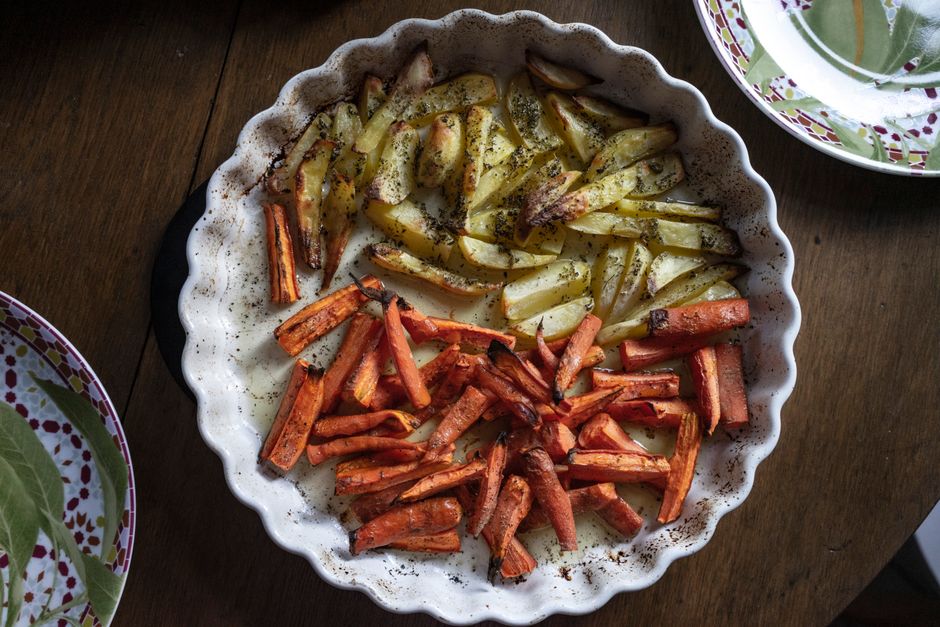
| Carrots, 1/2-inch diagonal slices | 22–28 minutes | Light resistance in the center; darkened edges |
| Brussels sprouts, halved | 22–28 minutes | Cut side is deeply browned; leaves are crisp |
| Cauliflower, 1 1/2-inch florets | 20–25 minutes | Brown tips and a tender stem |
| Red onion, 1-inch wedges | 18–24 minutes | Soft layers with browned outer edges |
| Delicata squash, 1/2-inch half-moons | 18–22 minutes | Fork-tender flesh and caramelized skin |
| Green beans, whole | 12–16 minutes | Wrinkled spots with a crisp-tender center |
Start with dense vegetables
Put squash, carrots, potatoes, and parsnips in first. Give them 10 to 15 minutes before adding Brussels sprouts, cauliflower, onions, or mushrooms. This staged start is the strongest default for a mixed autumn tray because it protects the dense vegetables from staying raw while the quick vegetables burn.
Cut dense vegetables smaller if you need a faster dinner. A 1/2-inch sweet potato cube can finish in roughly 20 to 25 minutes; a 1-inch cube may need 30 to 35. Keep the pieces consistent. A pan full of random sizes creates random doneness, which no seasoning can repair.
Manage moisture before the timer starts
Pat washed vegetables dry. Wet surfaces delay browning and encourage steaming. Use about 1 to 2 teaspoons of oil per pound of vegetables, enough to coat without pooling. Spread the pieces in one layer with a little visible pan between them.
For reference, a full-size Nordic Ware Naturals Baker’s Half Sheet measures about 18 by 13 inches and lists a $20 MSRP. A crowded half sheet cooks differently from a lightly loaded one, so use two pans when vegetables cover the surface edge to edge. More pan area is often a better trade than another 10 minutes of pale, soft food.
How to stage protein so everything finishes together
Use this sequence for almost any sheet-pan autumn dinner. The goal is to align the finish time, not to force every ingredient into the oven at the same moment.
- Choose the anchor. Pick the ingredient with the longest cooking time. Bone-in chicken thighs, thick pork tenderloin, and 1-inch squash cubes usually anchor the schedule. Thin salmon fillets and green beans do not.
- Set the cut size. Keep chicken pieces close to 1 inch at the thickest point when possible. Cut vegetables so they can finish within the same 10-minute window. A large chicken breast beside thin onion slices is a built-in mismatch.
- Calculate the stagger. If squash needs 35 minutes and salmon needs 12, roast the squash alone for about 23 minutes before adding the salmon. If chicken thighs need 35 minutes and Brussels sprouts need 25, add the sprouts after the chicken has roasted for 10 minutes.
- Dry the protein. Pat chicken, pork, fish, or sausage dry before seasoning. Surface moisture delays browning and can make the vegetables beside it soggy.
- Check temperature in the thickest area. Insert the probe into the center, away from bone and the pan. ThermoWorks Thermapen ONE is rated for one-second readings with ±0.5°F accuracy in its key range and listed at $74 during a 2026 closeout check. The OXO Good Grips Chef’s Precision Digital Instant Read Thermometer lists a $25.99 price and a -22°F to 302°F range. A basic working thermometer is enough if it gives a stable reading.
- Rest the protein while the vegetables finish. A pork chop or chicken thigh can rest for several minutes. Fish has less margin, so time it to finish last. Move cooked protein to a clean plate; never return it to a surface that held raw meat without washing it first.
Useful protein baselines
| Protein | Typical 425°F time | Safety or doneness target |
|---|---|---|
| Bone-in chicken thighs | 35–45 minutes | 165°F in the thickest part |
| Boneless chicken thighs | 25–35 minutes | 165°F |
| Pork tenderloin, 1 1/2 inches thick | 20–28 minutes | 145°F, then rest 3 minutes |
| Salmon fillet, 1 inch thick | 10–14 minutes | 145°F for the USDA safety minimum |
| Fresh pork sausage links | 20–25 minutes | 160°F if made from ground pork |
When the protein is frozen or unusually thick
Do not treat a frozen chicken breast as a normal 425°F ingredient. The outside can brown while the center remains far below a safe temperature. Thaw meat in the refrigerator, or follow a tested recipe designed for frozen cooking. If a pork tenderloin is twice as thick as the chart example, add time based on temperature readings rather than doubling the clock automatically.
The pan setup that earns the strongest verdict
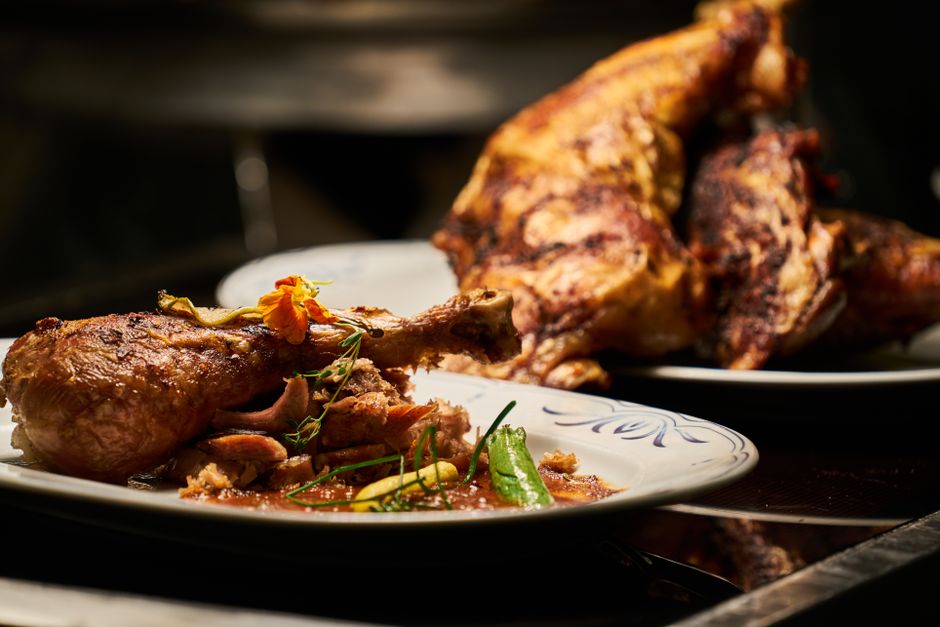
My clear verdict: leave empty space before you add extra ingredients. Airflow improves browning, shortens the gap between the early and late pieces, and gives you a more reliable roast than a heavily loaded pan.
A sheet pan is not a shallow casserole. It works when hot air reaches multiple sides of the food. Pack the surface tightly and the vegetables release water faster than the oven can remove it. The result is soft, pale food with occasional burned corners. The failure is physical, not a seasoning problem.
Use one pan when the timing window is close
One pan works well when the ingredients finish within about 10 minutes of each other. Chicken thighs with Brussels sprouts and delicata squash are a strong match after a short stagger. Salmon with cauliflower and green beans also works when the dense vegetables start first.
Use a second pan when you need different temperatures, when the protein releases a large amount of liquid, or when vegetables fill more than two-thirds of the surface. A second pan costs more washing but protects texture. From a consumer point of view, that is a favorable trade: one extra pan is cheaper than wasting a full dinner.
Keep sauces and sweet glazes out of the early stage
Maple syrup, honey, barbecue sauce, and sweet balsamic reductions can burn before thick vegetables soften. Roast with oil, salt, pepper, and dry spices first. Add sweet glaze during the final 5 to 8 minutes, or toss it on after roasting.
Acidic finishes such as lemon juice, cider vinegar, and mustard brighten the food without adding much surface sugar. Apply them after the vegetables brown. A late finish gives you stronger flavor control and fewer blackened edges.
Three autumn formulas with clear verdicts
Best for a family dinner: chicken thighs, squash, and Brussels sprouts
Start 1-inch butternut squash cubes at 425°F for 10 minutes. Add bone-in chicken thighs, Brussels sprout halves, oil, salt, black pepper, and smoked paprika. Roast for another 25 to 35 minutes, checking the chicken at the thickest point. The verdict is clear: this is the most forgiving combination because the vegetables tolerate a few extra minutes while the thighs stay moist.
Best for a fast meal: salmon, cauliflower, and green beans
Roast cauliflower florets for 12 minutes with oil and salt. Add 1-inch salmon fillets and green beans, then roast for 10 to 14 minutes more. Check the salmon at the thickest part and remove it at the safe temperature. This formula wins on speed, but it has a narrow window. Do not add the salmon at the start or the fish will overcook while the cauliflower catches up.
Best for a vegetarian tray: delicata squash, chickpeas, and red onion
Roast delicata half-moons and red onion wedges for 12 minutes. Add drained, thoroughly dried chickpeas and roast for 10 to 15 minutes more. Finish with cider vinegar, toasted pumpkin seeds, or a spoonful of plain yogurt after the pan leaves the oven. This is the most flexible formula because the ingredients do not share a meat-safety deadline, but drying the chickpeas still matters if you want crisp edges.
The reliable sheet-pan method is simple: match cut size, start the slow ingredients first, leave room for airflow, and use temperature readings for protein. Roasting times are useful estimates; texture and safe internal temperature make the final decision.