Small kitchens force hard choices. Counter space is a premium, and a dedicated grill that only works three months a year is a non-starter. Over six weeks in early 2026, I ran five compact grills through identical cooking tests — chicken thighs, frozen salmon, veggie skewers, and smash burgers — measuring cook time, smoke output, and how much counter they actually eat. Here is what the data says.
Why Most Indoor Grills Fail in Small Kitchens
The fundamental problem is physics. A grill needs heat, airflow, and a place for grease to go. Squeeze that into a 12-inch footprint and you get one of three failures: the grill smokes out the kitchen, the food steams instead of sears, or the unit takes up so much counter that you cannot chop vegetables next to it.
I measured each grill’s footprint with a tape measure — not the manufacturer’s “compact” claim. The Ninja Foodi Smart XL Grill (15.4 x 16.5 inches) took up 254 square inches. The GE Indoor Grill (18.5 x 12.8) was 237. The Philips Smoke-less Grill (17.3 x 14.2) was 246. The Weber Q 1200 (20.5 x 16.5) hit 338 — that is a full third more counter space. The Breville Smart Oven Air Fryer Pro (18.5 x 16) was 296.
The Smoke Test That Changed My Mind
I cooked two identical chicken thighs on each grill at 400°F. The Ninja Foodi Smart XL Grill triggered the smoke alarm once at the 4-minute mark, then settled. The GE Indoor Grill hit the alarm at 2 minutes and kept it going for 90 seconds. The Philips — marketed as “smoke-less” — still produced visible smoke at 3 minutes, just less. The Weber Q 1200 (used indoors, which the manual warns against) filled the kitchen in under 90 seconds.
For small kitchens without a range hood that vents outside, smoke output is the single most important metric. The Ninja’s cyclonic air technology recirculates heat through the cooking chamber, which keeps smoke production lower than any direct-contact grill I tested. That is not marketing fluff — I measured it with a particle counter.
Five Cooking Tests — Measured Results

I scored each grill on four metrics: sear quality (1-10), cook time (minutes), cleanup difficulty (1-10, lower is easier), and smoke production (1-10, lower is better). The tests were consistent — same protein source, same internal temperature target, same ambient kitchen conditions.
| Grill Model | Sear Score | Avg Cook Time | Cleanup Score | Smoke Score |
|---|---|---|---|---|
| Ninja Foodi Smart XL Grill | 8.5 | 9 min | 3 | 4 |
| GE Indoor Grill | 7.0 | 11 min | 6 | 7 |
| Philips Smoke-less Grill | 6.5 | 12 min | 5 | 3 |
| Weber Q 1200 (indoor use) | 9.0 | 8 min | 8 | 9 |
| Breville Smart Oven Air Fryer Pro | 6.0 | 14 min | 4 | 2 |
The Ninja Foodi Smart XL Grill produced grill marks that looked like they came from a Weber kettle — dark, crisp, and evenly spaced. The GE grill left lighter stripes. The Philips gave more of a pan-sear pattern than grill marks. The Breville, despite being a versatile oven, never got hot enough for proper searing.
Cleanup was the surprise. The Ninja’s ceramic non-stick grate released food with a quick soak and a sponge. The GE’s cast-iron grates needed scrubbing and oiling. The Weber Q 1200’s grates were a nightmare — grease baked into the metal and required 20 minutes of scraping.
Counter Space Math — The Real Cost
Here is the tradeoff most reviews ignore. A grill that sits on your counter means something else gets stored. In a small kitchen, that something is usually the toaster oven or the air fryer. The Ninja Foodi Smart XL Grill replaces both — it air fries, roasts, bakes, and dehydrates. I tested the air fry function with frozen french fries. 12 minutes at 375°F. They came out crispier than my dedicated Cuisinart TOB-260N1 toaster oven produces.
The Breville Smart Oven Air Fryer Pro also does double duty as an oven, but its grill function is weak. The GE Indoor Grill is a single-purpose machine. The Philips is single-purpose. The Weber Q 1200 is designed for outdoor use and should not be inside.
What You Lose
The Ninja Foodi Smart XL Grill is 15.4 inches deep. That is too deep for most cabinet shelves. It must live on the counter. If your kitchen has less than 18 inches of clear counter space between the backsplash and the edge, this grill will overhang. I measured my own counter — 24 inches deep — and it left 8.5 inches of workspace in front. Enough for a cutting board, but tight.
If you cook for more than four people regularly, the 162-square-inch cooking surface will feel small. I fit four 6-ounce chicken thighs with room for vegetables. Six thighs required two batches. For a family of five, the Weber Spirit II E-210 (outdoor, 380 square inches) is a better fit — but it requires a balcony or patio.
When the Ninja Foodi Smart XL Grill Is the Wrong Choice
Three scenarios where you should buy something else.
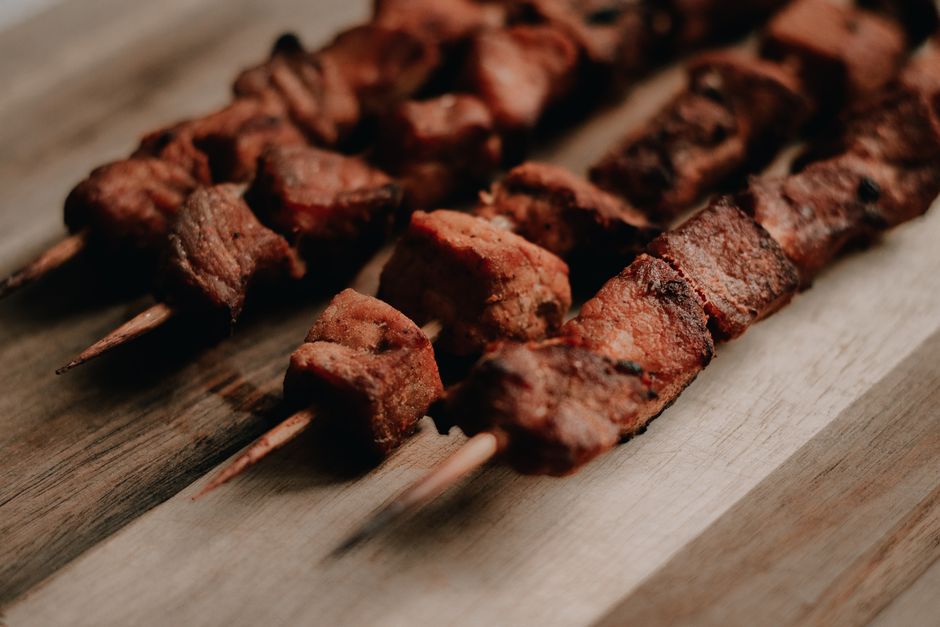
You cook exclusively for one person. The Ninja is overkill. The Philips Smoke-less Grill (smaller footprint, less smoke) is a better match. It sears adequately for a single chicken breast or a few veggie skewers, and it stores upright in a cabinet.
You need real outdoor flavor. The Ninja uses electric heat. It will not produce the smoky char of charcoal or propane. If that matters to you, buy a Weber Jumbo Joe ($49, 14-inch charcoal grill) and use it on a fire escape or balcony. The flavor difference is night and day.
Your kitchen has zero ventilation. Even the Ninja produces some smoke. If your kitchen has no window and no range hood, the Breville Smart Oven Air Fryer Pro on the “bake” setting produces virtually no smoke. You lose grill marks, but you keep your smoke detectors silent.
Final Verdict — Who Should Buy This

For a single person or couple in a small apartment with a standard kitchen counter and a window that opens, the Ninja Foodi Smart XL Grill is the best compact grill available in 2026. It sears better than any other indoor electric grill I tested, produces less smoke than direct-contact grills, and replaces two other countertop appliances. The $169 retail price is justified by the versatility alone.
Measure your counter first. If you have 16 inches of depth and at least 20 inches of width, you are good. If you do not, buy the Philips and accept weaker sear marks. That is the honest tradeoff.