Core Benefits of Xeriscaping
Xeriscaping isn’t just a trend—it’s your wallet’s best friend and your garden’s new superhero. Here’s why:
Slash Water Bills by 50–75%
Yes, seriously! Homeowners across dry regions have reported cutting their irrigation costs in half or more. For example:
| Location | Water Bill Reduction | Notes |
|—————-|———————|———————————-|
| Phoenix, AZ | 60% | Swapped Bermuda grass for succulents |
| Los Angeles, CA| 50% | Drip irrigation + drought-tolerant natives |
| Austin, TX | 75% | Replaced lawn with native grasses |
Cut Maintenance Time & Costs
Low-water landscaping means less mowing, fewer weeds, and zero summer brown patches. That’s hours back in your weekend and less spending on fertilizers or lawn services.
Boost Property Value & Curb Appeal
Far from “desert wasteland,” a well-designed xeriscape looks lush, modern, and welcoming. Neat grouping of plants and clean hardscape lines increase your home’s market pull instantly.
Support Local Wildlife & Pollinators
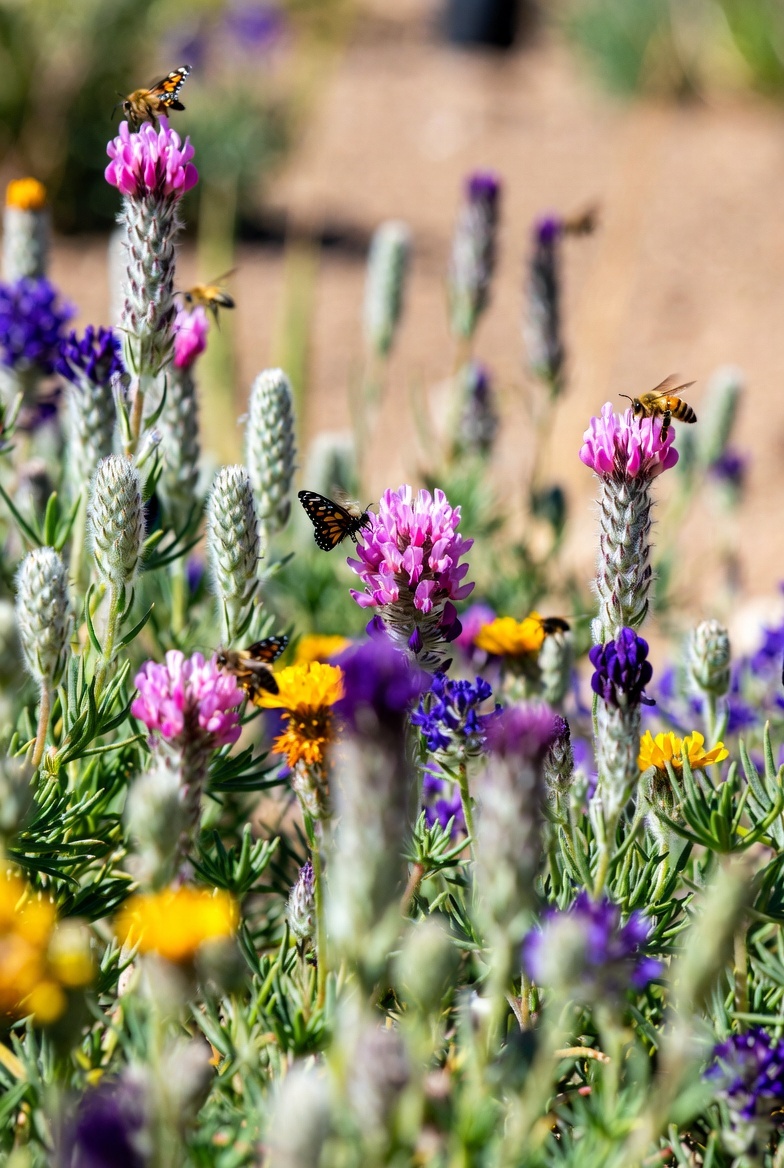
By choosing native and drought-tolerant plants, you’re creating a habitat for bees, hummingbirds, and butterflies. Plus, these plants thrive with less water—good for nature and your water bill!
Bottom line: Xeriscaping gives you a stunning, sustainable yard that saves money, time, and the planet. Who says you can’t have a jaw-dropping yard and a tiny water bill?
Getting Started: Planning Your Xeriscape
Before diving into your xeriscape project, start by assessing your climate zone, soil type, and how much sun your yard gets daily. Knowing your water municipality rates will help you calculate potential savings and plan accordingly.
Next, create a simple site survey and base plan. Map out existing features and note shady spots versus sunny areas. This groundwork makes it easier to group plants by their water needs—a strategy called hydrozoning—so thirsty plants stay together and drought-tolerant ones get minimal watering.
Amending soil properly at the start is key. Do this once rather than every year to improve water retention, letting your plants thrive with less irrigation. To maximize water savings, install an efficient drip irrigation system paired with a smart controller that adjusts watering based on weather and soil moisture. This approach ensures your low-water landscaping is both effective and easy to maintain.
For further tips on choosing and grouping drought-tolerant plants, check our guide on six water-wise ground covers suited for various climates.
35 Xeriscape Design Ideas by Style & Region
When it comes to xeriscape design, matching your style and regional climate is key for a thriving, water-wise garden. Here are popular ideas that blend beauty with drought-tolerant landscaping:
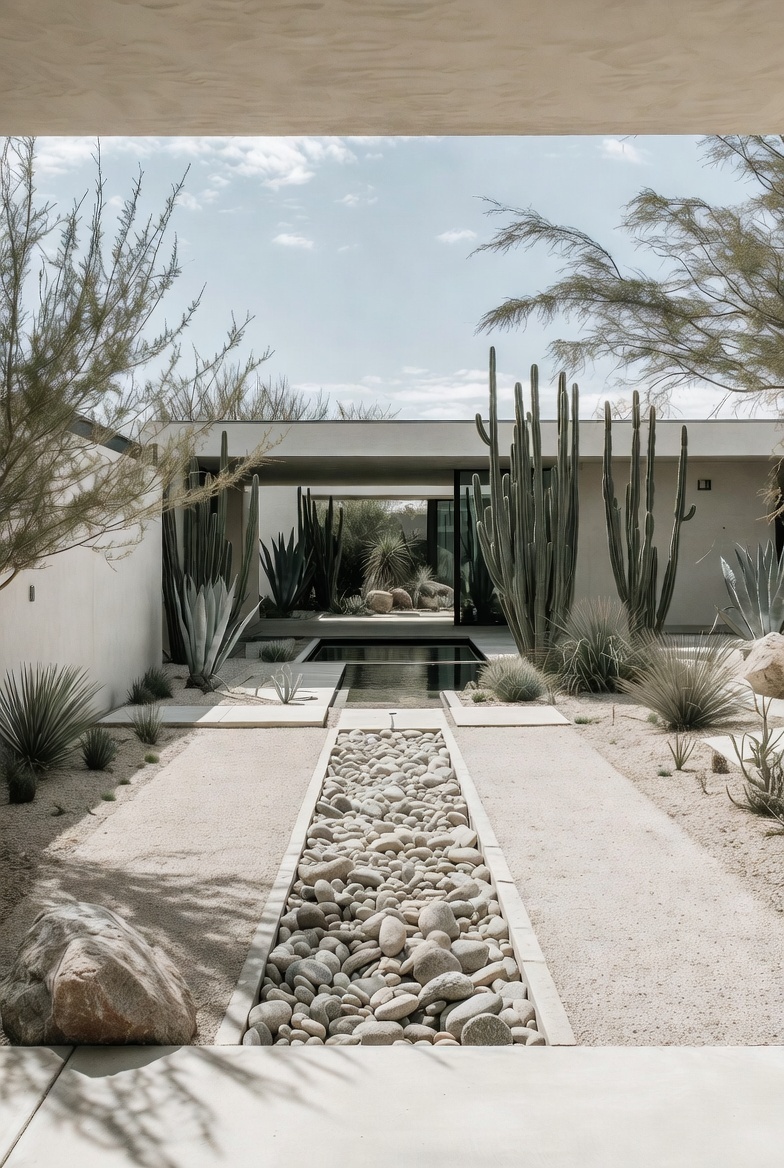
- Modern & Minimalist Xeriscapes: Clean lines, simple plant palettes like succulents, agaves, and low-water grasses create a sleek, low-maintenance look perfect for urban settings.
- Mediterranean & Tuscan-Inspired: Think olive trees, lavender, rosemary, and gravel paths combining drought-tolerant charm with warm, inviting vibes.
- Desert Oasis Looks: Cactus, yucca, and desert wildflowers layered with boulders and decomposed granite offer a rugged yet serene desert landscaping idea.
- Colorful Cottage-Style Drought-Tolerant Gardens: Mix native wildflowers and perennials for bursts of color that thrive with minimal water.
- Native Grass & Wildflower Meadows: These support local pollinators and provide natural movement and texture with very low water needs.
- Succulent & Agave Showcase Gardens: Perfect for sunny spots, these hardy plants add sculptural interest and thrive in dry conditions.
- Courtyard & Small-Space Xeriscapes: Use container planting, vertical gardens, and compact drip irrigation to turn small yards into stylish water-wise retreats.
- Front-Yard Conversions That Boost Curb Appeal: Swap out thirsty lawns for layered xeriscapes with evergreen natives and hardscape accents to increase property value.
- Slope & Erosion-Control Designs: Choose deep-rooted natives and terracing techniques that stabilize soil and reduce water runoff effectively.
For a deeper dive into xeriscape principles and planning, consider checking out detailed guides like the first principle of xeriscape to ensure your design goes beyond just aesthetics and maximizes water efficiency.
Best Drought-Tolerant Plants by Region
Choosing the right drought-tolerant plants depends a lot on your region’s climate and soil conditions. Here’s a quick guide to the best water-wise plants for each major area:
Southwest Desert
Think agaves, yuccas, desert marigolds, and creosote bushes. These plants thrive in blazing sun with minimal water, perfect for xeriscaping in dry desert landscapes.
California Coastal & Inland
Coastal sage, manzanita, lavender, and California poppies do great here. These plants prefer well-drained soil and can handle dry summers typical of the Mediterranean climate. For wildflower meadow ideas in mountain settings nearby, check out detailed tips on growing mountain wildflowers.
Rocky Mountains & High Plains
Here, tough native grasses like blue grama, buffalo grass, and prairie junegrass work well, along with hardy wildflowers adapted to cooler temps and dry soil.
Texas & Southeast
Look for drought-tolerant native shrubs such as yaupon holly, Texas sage, and coral honeysuckle. These plants balance heat tolerance with occasional wet periods.
Pacific Northwest Dry Side
For the drier parts of the Northwest, stick with Oregon grape, sedums, and Kinnikinnick. These plants endure the region’s seasonal dryness without fuss.
Australia & Mediterranean Europe
Eucalyptus, olive trees, rosemary, and drought-tolerant lavender suit the dry, hot summers here. They bring that classic Mediterranean garden feel without guzzling water.
Matching your plant choices to local conditions not only cuts water use but also supports native wildlife and pollinators, creating a resilient and beautiful garden.
Replacing Your Lawn: Step-by-Step
Switching from a thirsty lawn to a water-wise xeriscape can feel like a big job, but breaking it down makes it manageable. Two popular methods to remove existing grass are sheet mulching and the sod cutter method. Sheet mulching involves layering cardboard or newspaper over your lawn, then covering it with mulch to smother the grass naturally—it’s slower but saves effort and is great for improving soil health. The sod cutter method is faster and involves physically cutting and removing the grass, which is ideal if you want a quick start.
When considering cost, xeriscaping usually has a higher upfront price, but it pays off with a 5-year ROI through savings on water bills and maintenance. Compared to traditional lawns, you can save 50–75% on water costs, making it a smart long-term investment.
For lawn alternatives, here are the top options to consider:
- No-mow fescue grass for a green but low-water yard
- Sedum tiles, which are colorful, drought-resistant ground covers
- Gravel gardens with stepping stones for durable, elegant paths
- Native groundcovers and drought-tolerant perennials that blend beauty with low water use
Replacing turf with these options not only cuts water use but also reduces mowing and fertilizing needs, making your yard more sustainable and easy to care for. For inspiration on planting drought-resistant flowers that thrive in your xeriscape, check out our guide on the top fall-flowering waterwise plants.
Hardscape Ideas That Save Water & Look Luxe
In xeriscaping, hardscapes are your best friends for cutting water use while adding style and function. Materials like decomposed granite, flagstone, and permeable pavers not only look great but also allow rainwater to soak into the ground, reducing runoff and water waste.
Consider installing a dry creek bed to manage drainage naturally, which doubles as a beautiful, low-maintenance feature. Large boulder placements and gabion walls provide texture and structure without needing a drop of water.
For outdoor living spaces, add elements like fire pits and corten steel edging—these bring an industrial-chic vibe and are super durable in dry climates. If you love entertaining, think about building an outdoor kitchen designed with drought-friendly materials, combining function and low water use.
These hardscape choices prove that a water-wise garden doesn’t mean sacrificing luxury or curb appeal. Pair with smart plant choices, and your yard will be both stunning and sustainable.
Mulch, Soil & Irrigation Hacks That Drop Water Use 60%+
Using the right mulch and soil amendments can cut your water use by more than 60%. Organic mulch like bark, straw, or compost helps retain moisture better than inorganic options such as gravel or rubber. Mulch should be applied about 2–3 inches deep—too thin won’t hold moisture well, and too thick can suffocate roots.
Improving soil with compost or well-aged organic matter boosts its ability to hold water, meaning fewer irrigation cycles. Once you improve soil properly, there’s usually no need to amend it every year.
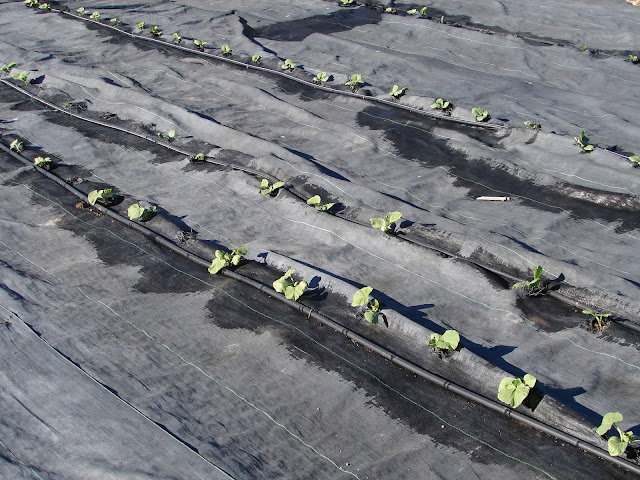
For irrigation, drip systems are the gold standard, delivering water directly to plant roots with minimal waste. Pair this with a smart controller that adjusts watering based on weather and soil moisture to save even more. You can get the latest tips on efficient drip irrigation on this page about drip irrigation systems.
Subsurface drip irrigation goes a step further by putting water below the soil surface, reducing evaporation almost completely. Choosing the right irrigation and soil setup is the quickest way to slash your water bill while keeping plants healthy in any xeriscape design.
Budget Breakdown: How Much Does a Xeriscape Really Cost?
Switching to xeriscaping can save you water and money in the long run, but what about upfront costs? Here’s a quick look at budgets so you know what to expect.
DIY vs. Professional Installation Costs
- DIY: Generally, you can expect to spend around $1 to $4 per square foot for materials if you tackle the work yourself. This includes plants, soil amendments, mulch, and irrigation basics.
- Professional: Hiring pros typically costs between $5 to $15 per square foot, depending on complexity, plant choices, and hardscape elements. Pros often bring efficiency and design expertise, which can boost your landscape’s performance and curb appeal.
Where to Save and Where to Splurge
- Save on: Mulch, native drought-tolerant plants (often cheaper and low maintenance), and doing prep work like sheet mulching yourself.
- Splurge on: Efficient drip irrigation systems, smart irrigation controllers, and high-quality soil amendments since these directly impact water savings and plant health long term.
Rebates and Tax Incentives in 2026
Many water municipalities and states provide rebates or tax credits for converting lawns to xeriscapes or installing water-wise irrigation. These programs can cover 20-50% of your costs, so be sure to check what’s available where you live.
Investing in a water-efficient landscape may seem costly at first, but with savings on water bills and maintenance, plus increasing your home’s curb appeal, the return on investment often pays off within 3 to 5 years.
By making smart choices between DIY and professional help and using available incentives, xeriscaping becomes affordable and practical anywhere.
For tips on soil and planting timing to maximize your xeriscape success, explore our detailed guides like when to plant potatoes, as timing your planting right makes a big difference in water use efficiency.
Common Xeriscape Mistakes & How to Avoid Them
Even with the best intentions, xeriscape projects can face setbacks. Avoid these common mistakes to make your low-water landscaping successful:
-
Planting without proper research: Choosing drought-tolerant plants that don’t fit your climate or soil can lead to poor growth. Always match plants to your local conditions—check guides on xeriscape plants for regions like California or Texas to get it right.
-
Ignoring hydrozoning: Grouping plants with different water needs together wastes water and stresses plants. Separate areas by water requirement to maximize efficiency.
-
Overwatering early on: Even drought-tolerant plants need time to establish. Water deeply but infrequently during the first few months, then cut back gradually.
-
Skipping soil amendments: Many soils lack the structure to retain moisture yet drain well. Amend soil properly once during installation instead of year after year to improve success.
-
Installing inefficient irrigation: Avoid traditional sprinklers in favor of drip irrigation paired with smart controllers. This combination reduces water use drastically.
-
Expecting instant results: Xeriscapes thrive over time. Be patient and adjust your maintenance routine as plants settle in.
Avoiding these pitfalls ensures your water-wise garden ideas pay off long-term—saving water and boosting curb appeal without headaches. For tips on soil preparation and plant choices, check out resources like this detailed guide on what to grow in your climate.